
Endotest® for Endometriosis
SKU
ACU-ENDO
Categories Female Health, Saliva Tests

£850.00


To order this test you will need to complete a short online consultation to check your eligibility. Please request a consultation and complete the contact form and we will send you the consultation to complete online.
Before ordering this test, you must complete a short online consultation to check your eligibility. This will be reviewed by our prescriber and if approved you can proceed to buying this test
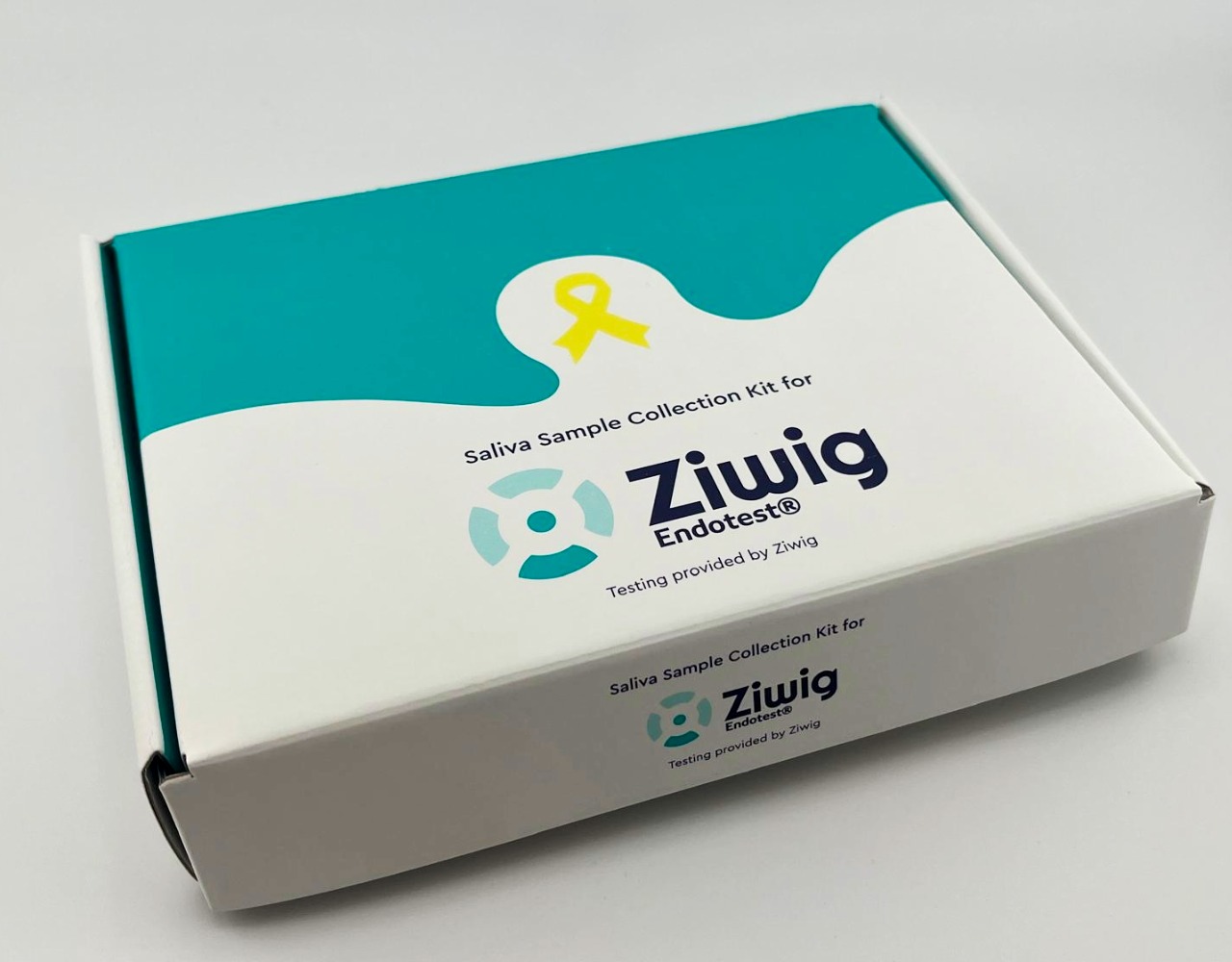
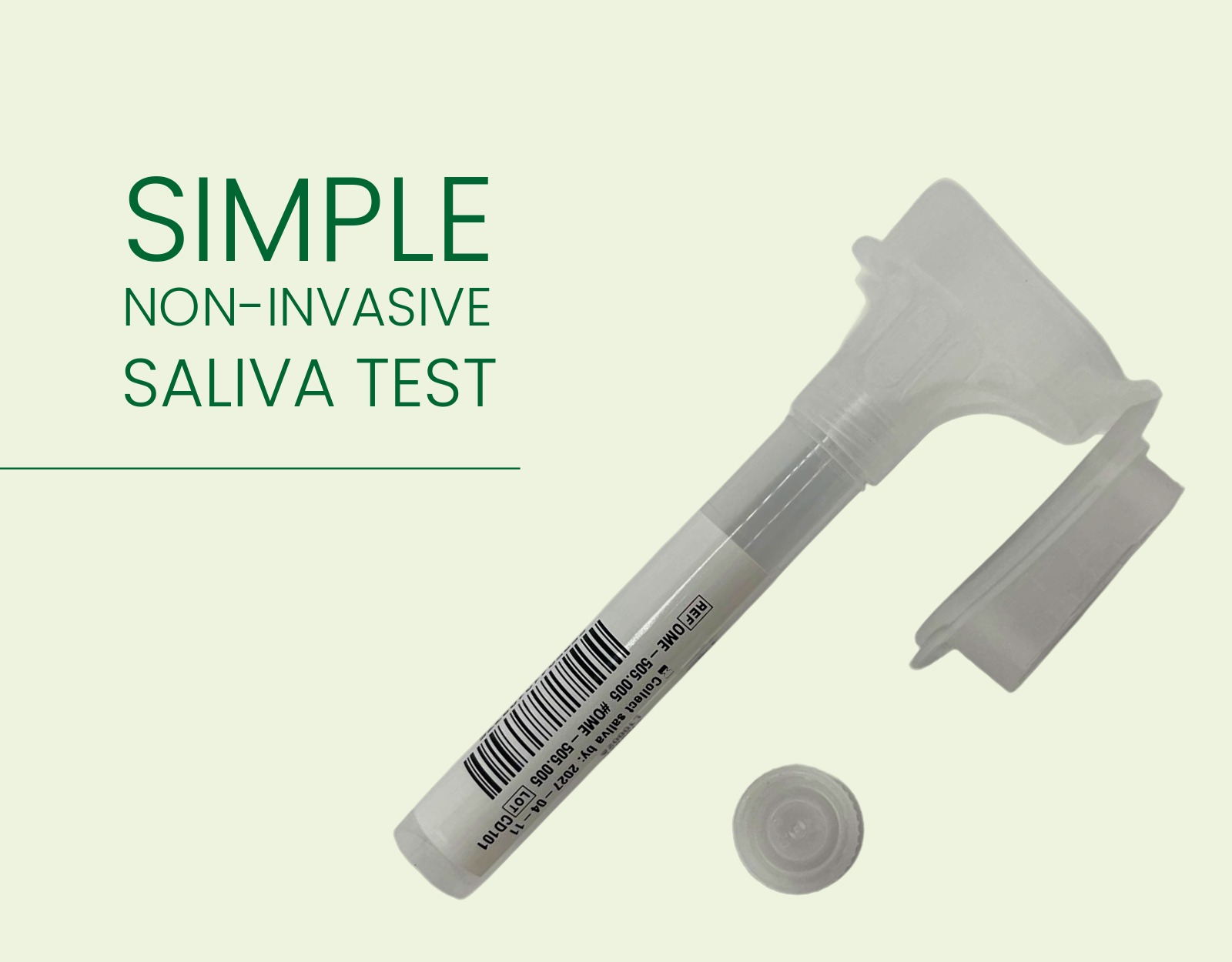
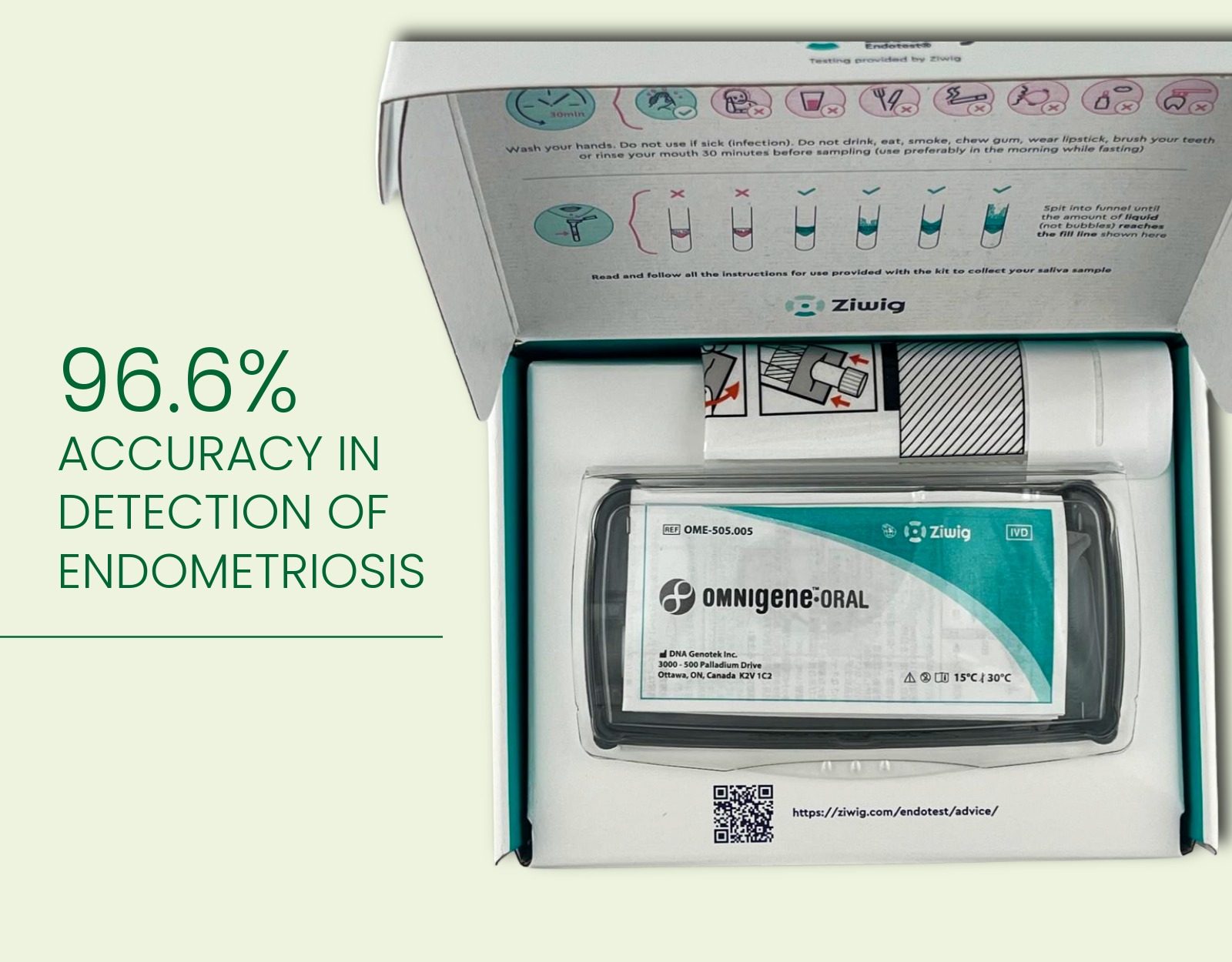
Ziwig Endotest® is a non-invasive saliva test designed to help diagnose endometriosis early and with a high degree of reliability. Rather than relying on surgery, it works from a simple saliva sample that you provide using an easy-to-use collection kit.
The test examines genetic material found naturally in saliva and looks for a specific pattern, or “signature,” linked to endometriosis. It then gives a clear positive or negative result, helping reach answers sooner.
Endotest® was developed by Ziwig, a French company focused on women’s health, and combines two advanced technologies: next-generation human RNA sequencing and artificial intelligence.
Ziwig Endotest® is validated for women between 18 and 43 years of age who are experiencing one or more symptoms associated with endometriosis. Please complete the online consultation before ordering your test to check your eligibility.
It may be especially helpful if you have been living with unexplained pelvic or menstrual symptoms and are looking for clarity without waiting for, or undergoing, surgery. Because endometriosis can begin in adolescence and take years to identify, the test can be a valuable step for anyone whose symptoms suggest the condition.
It is important to know that Endotest® is not intended to replace pelvic medical imaging. If endometriosis is confirmed, imaging such as ultrasound or MRI is still needed to describe, map and classify the lesions so that your care can be planned. Endotest® is best thought of as a fast, reliable first step toward answers, used alongside traditional diagnsotics tests with the guidance of your healthcare team.
The process is straightforward and can be completed without any procedures or hospital visits for sample collection:
Because it relies only on saliva, the test avoids the discomfort, risk and recovery time associated with surgical diagnosis.
This test does not include interpretation of your results.
Endometriosis is a chronic inflammatory condition in which tissue similar to the lining of the womb grows in places outside the uterus. These growths, known as lesions, can trigger ongoing inflammation, pain and scarring, and may affect fertility and overall quality of life.
Endometriosis affects around 10% of women in the UK — roughly 1.5 million people — and an estimated 190 million women of reproductive age worldwide. It can affect anyone who menstruates and often first appears in adolescence.
Endometriosis has historically been difficult to diagnose. On average, it takes around nine years from the first symptoms to a clinical diagnosis which means many people live with symptoms for years before receiving answers.
Endometriosis can present in many different ways, and symptoms vary from person to person. You may wish to consider a test if you experience one or more of the following:
For a long time, the “gold standard” for diagnosing endometriosis was laparoscopy — keyhole surgery performed under general anaesthetic to look for lesions directly. While accurate, it is invasive, carries the usual risks of surgery, and often involves long waits for an appointment.
Imaging methods such as transvaginal ultrasound and MRI are also used, but they can miss lesions or misjudge the extent of disease, particularly in earlier or subtler cases.
Endotest® offers a different route. As a saliva test, it is:
Endotest® is designed to complement rather than replace traditional diagnostic pathways, helping to reduce reliance on surgery for diagnosis and to reach answers more quickly.
Endotest® is built on the discovery that endometriosis leaves a detectable “fingerprint” in the body in the form of microRNAs — small molecules that help regulate how genes behave. People with endometriosis show a distinctive microRNA pattern in their saliva.
To read this pattern, the test uses next-generation RNA sequencing to capture a vast amount of genetic data, and artificial intelligence to interpret it and identify the endometriosis signature with precision.
In clinical research presented at a women’s health conference, the salivary microRNA signature achieved:
When compared against surgical confirmation, the saliva signature showed substantially lower rates of misclassification, underestimation and overestimation than imaging using ultrasound, MRI, or both.
“Very impressed with the efficiency of All Checked Up. Posted my test before Lunch on Tuesday. Wednesday morning received an email saying they had my test and after Lunch received a second email with the result that I was OK. Not the cheapest test kit but worth every penny. Highly recommended.” – Davidc2
“Very quick, very well explained information” – Felicity Smith
“The test was fully explained and easy to take. Results arrived the following day. Absolutely top class service and well worth the money for peace of mind.” – David Payne
“Very efficient service. Test kit quickly delivered and test results back within 48 of returning. Would definitely use again.” – IainD
“Very good service the results came within 24 hrs and I will use again. Recommend highly.” – Stephen
Orders placed before 4pm on a Monday to Friday and 11am on Saturday will be sent out the same day providing we have all the correct patient details and shipping information (Our Cut Off time).
We offer a number of delivery options:
If you have any questions about this test, please complete the form below and we will respond by email
100% of our Google reviews are rated 5* and we are rated Exceptional on Feefo. Read some of our most recent 5* reviews below
Please note our self-collection tests are only for patients over the age of 18 years old