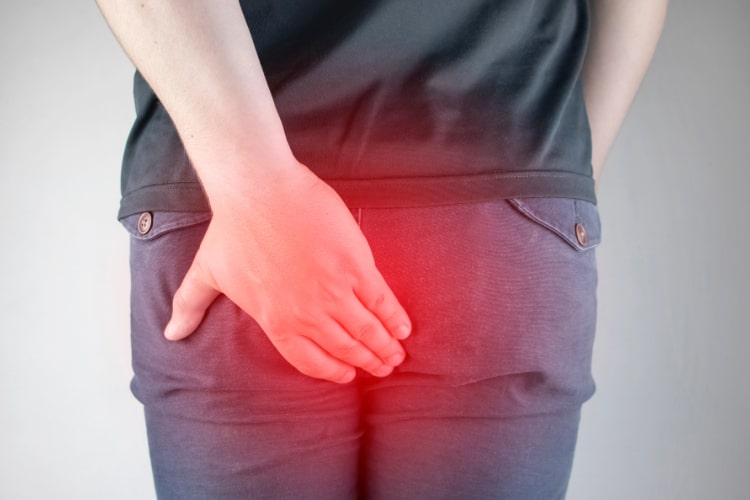
Bowel incontinence is another name for the medical term faecal incontinence. It is the inability to control bowel movements which leads to unexpected leakage of stool or poo.
Faecal incontinence is not a diagnosis but is actually a sign or a symptom; therefore it is often as a result of some other thing or cause, in fact, faecal incontinence usually has multiple contributory factors.
These contributory factors can broadly be divided into seven different types of subgroups in total, examples including structural abnormalities of the bottom (this can be for example a rectal prolapse), neurological conditions, and changes to the frequency of going to the toilet or sometimes it may not have a specific identifiable cause.
Faecal incontinence reportedly affects up to 10% of adults in the UK with up to an estimated 1% of adults experiencing regular faecal incontinence that affects their quality of life. Certain groups of people are more likely to be affected by faecal incontinence such as frail older people, people with urinary incontinence, loose stools or diarrhoea from any cause, women following childbirth, and those with neurological or spinal disease/injury.
Management of faecal incontinence includes changing diet, pelvic floor exercises, and taking anti-diarrhoeal medication such as loperamide.
About Bowel Cancer
Bowel cancer is the fourth most common cancer in the UK and results in around 16,800 deaths in the UK every year (which equates to 46 deaths every day). This makes it the second most common cause of cancer death in the UK.
Bowel cancer starts in the large intestine either in the colon or rectum. The large bowel includes the colon, back passage (rectum), and back passage opening (anus)
Early stage bowel cancer can often be asymptomatic and when symptoms do appear, they can be similar to other bowel conditions such as irritable bowel syndrome and gastritis, therefore regular screening is important
Faecal incontinence and Bowel Cancer
If faecal incontinence is occurring during the night, or where there is associated bleeding from the bottom (called rectal bleeding), unintentional weight loss over 3 months or there has been a recent change in bowel habits such as diarrhoea or constipation, then this may be a sign of bowel cancer as well as other bowel-related conditions such as inflammatory bowel disease.
If any of these signs and symptoms are present, you can get a test which you can do at home that screens for Bowel Cancer. This test is known as a Quantitative Faecal Immunochemical test or QFIT for short. The test requires you to collect a small stool sample and return it to our laboratory for analysis. The laboratory will see if there is any blood present in the stool, even in the smallest of quantities, which may be a sign of bowel cancer. It has around an 86% effective rate for detecting bowel cancer, even in its early stages.
You can now also do a test that alongside screening for bowel cancer detects a protein called Calprotectin, which can be present in patients with inflammatory bowel disease such as Crohn’s or Ulcerative Colitis (UC). The test can be done together from the same stool sample which can provide a broader understanding of any signs and symptoms.
Conclusion
Bowel incontinence is interchangeably called faecal incontinence. Faecal incontinence is a symptom as opposed to a disease. Certain symptoms such as faecal incontinence at night and associated bleeding from the bottom can be a sign of bowel cancer so you may wish to consider screening for Bowel Cancer if any of these symptoms are present.
Faecal incontinence is often linked with being the result of multiple contributory factors which can range from structural abnormalities of the bottom to changes to having no specific identifiable cause. Faecal incontinence can occur in higher risk groups such as the frail and elderly. Management of faecal incontinence is usually by personal preference and can include lifestyle and diet changes to pelvic floor exercise.
References
[1] GP Notebook – Faecal incontinence https://gpnotebook.com/en-GB/pages/geriatric-medicine/faecal-incontinence
[2] NICE CG49 – Faecal incontinence in adults: management https://www.nice.org.uk/guidance/cg49