
All-inclusive price: covers blood draw, lab testing & digital results report
Stockholm3 evaluates 5 protein markers (including Total PSA, Free PSA, hK2, MSMB, and MIC1), 101 single nucleotide polymorphisms (SNPs / genetic markers), and individual clinical risk factors (age, family history, previous biopsies, and 5-ARI medication use). The test combines this information to give a risk score on the likelihood of clinically significant prostate cancer.
The test will provide clear, interpretable results ranging from Low to High risk. High Risk warrants referral to a urologist for further investigation.
Stockholm3 is equivalent across diverse ethnicities, and has been prospectively validated in more than 90,000 men with results published in more than 30 peer reviewed articles. Publications include the NICE briefing (August 2022) which is helpful in suggesting that Stockholm3 is more effective at predicting risk of prostate cancer than PSA alone.
Key characteristics
A standard PSA test only measures prostate-specific antigen, which can rise due to non-cancerous conditions like benign prostatic hyperplasia (BPH) or inflammation. Stockholm3® combines 5 protein markers with 101 genetic markers and clinical history, providing significantly higher accuracy and reducing false alarms.
The report provides a numerical risk score (0–100%):
We will send you a secure link to your email address where you will be able to view and download your test results.
You can also have your results posted to any UK address.
Results do not include a consultation unless otherwise stated
You can personalise this blood test by adding additional markers at a discounted price compared to having each marker as a standalone blood test.
Options on what can be added to each blood test will be presented when making your booking. If there is a specific blood test you require which is not listed and we are able to offer this, you can either call our Pharmacy beforehand or request the marker be added at your appointment.
We will take all required samples for your additional blood tests at your appointment. Additional blood tests must be tested at the same appointment as the main test in order to be eligible for the discounted add-on blood test price.
Not available in conjunction with any other special offer or promotion.
Call us on 01625 568 188 if you wish to know more details
You can book your blood test at any one of our clinics online or by calling us on 01625 708 173.
You will need to pay £15 deposit* when making your booking. The remainder can be paid at your appointment
We accept all major Credit/Debit cards including Visa, Mastercard and American Express.
We also accept Clear Pay and Klarna
*Some blood tests require a £30 deposit payment
We recommend turning up around 15 minutes early to your appointment. Our Phelobotomist will go through some basic medical questions to ensure you are well enough for the blood test. A blood sample will be taken from your arm and sent off to our UKAS accredited lab.
Yes, we are a registered Pharmacy with the General Pharmaceutical Council (GPhC). You can check our registration status here
No you do not need a referral from your GP for this blood test. We only require a referral for patients below the age of 18 years old. We can only provide blood tests to patients above 12 years old.
We will not share any test results with your GP unless you ask us to do so. We do however recommend you share any results you receive from us with your GP or regular prescriber so they have a full and accurate picture of your health
We are rated 4.8 on Trust Pilot


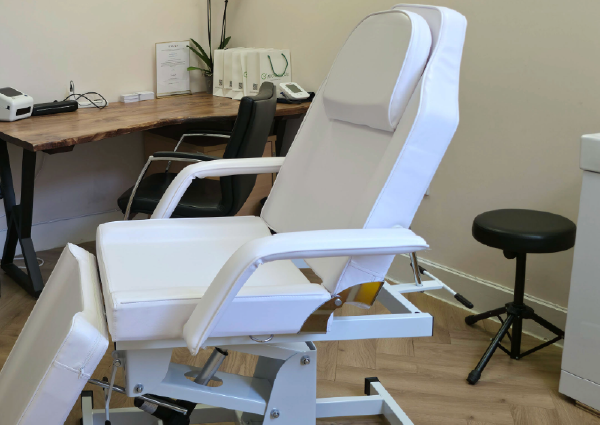
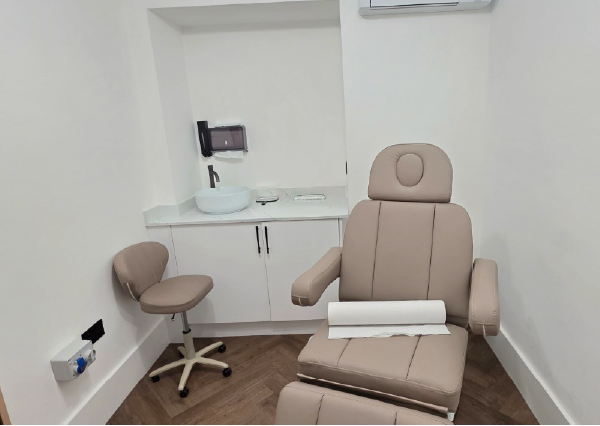
All sample testing is carried out in UKAS accredited and CQC registered pathology laboratories
We have a dedicated courier collection multiple times a day at all of our clinics delivering samples directly at the lab
Our blood tests and reporting is overseen by our clinical team of UK registered Pharmacists and clinicians
Medically Reviewed By:
Pharmacist
Last Clinical Review Date
NICE (National Institute for Health and Care Excellence): Stockholm3 for prostate cancer screening (Medtech Innovation Briefing [MIB303], Published August 2022)
Nordström et al. (2021): Prostate cancer screening using a combination of Stockholm3 and MRI-targeted biopsy: a prospective, randomized, non-inferiority trial. Lancet Oncology.
This page adheres to clinical guidelines established by NICE (National Institute for Health and Care Excellence)
Book an in-person, phone or video consultation with one of our Pharmacists or clinicians to discuss what blood or health screening test is best for you. The consultation fee is deducted from any subsequent blood test you book with us following the consultation
Please complete the form below to request a home visit. Once submitted, a member of our pharmacy team will contact you to confirm a price